

Boilers for cement, building materials and mineral raw materials
For this industry TIPO Kotlogradnja designs and manufactures: waste heat recovery boilers; thermal oil boilers; industrial steam boilers.
Each boiler is designed and manufactured to the required capacity, process requirements, fuel type and operating conditions of the plant.
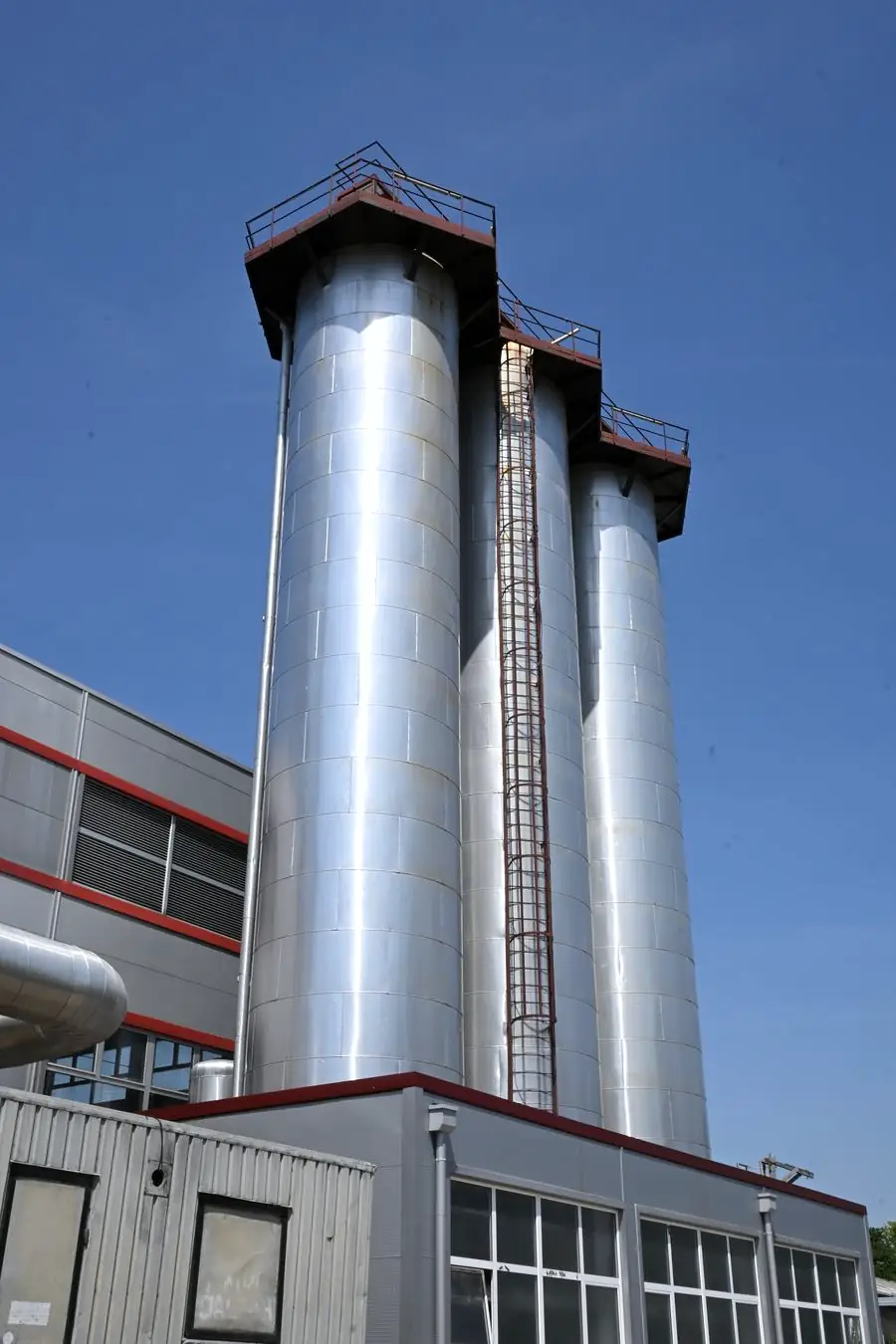
Heat and steam in building materials and mineral processing
In a cement plant the exhaust of the preheater, the calciner and the clinker cooler, and in some cases the kiln shell and the bypass gas, are major sources of waste heat. A waste heat recovery boiler in that stream produces steam, which is used for power generation or for heating feedwater. Using the heat directly for heating or drying requires a nearby consumer, and seasonal mismatch often makes this impractical, so power generation is the more common route. Drying raw material was one of the earliest uses of kiln exhaust heat, so the heat available to the boiler is defined together with the process team.
Other branches have different needs. Autoclaved aerated concrete (AAC) is hardened with pressurised steam in autoclaves. In asphalt plants, bitumen is stored in heated tanks, often by circulating thermal oil through coils heated by a thermal oil boiler, while electric heating is also used. In ceramics, kilns are the main energy consumer, and hot kiln exhaust can be reused elsewhere in the production chain. In the glass industry, waste gas heat is used to preheat combustion air and batch, and waste heat boilers supply steam or hot water.
Requirements that influence boiler selection and design
The most demanding condition for a waste heat boiler is dust-laden gas. In cement plants dust is abundant and clinker dust is highly abrasive, so a pre-duster is installed ahead of the boiler on the clinker cooler, heat transfer surfaces are kept clean by mechanical cleaning, and the tube arrangement supports dust removal and even gas distribution. The boiler is placed downstream of the preheater or cooler so that it does not disturb the kiln process. In glass making, corrosion is added to dust: the water or acid dew point must not be undercut, which matters especially for oxy-fuel furnaces, whose exhaust is rich in water vapour and carbon dioxide.
In thermal oil systems the most common cause of fluid degradation is overheating, and oxygen entering the system causes oxidation and sludge, so accurate temperature control, tightness and regular maintenance are part of the selection. Heated tanks are fitted with protection that switches off heating when the bitumen level falls below the heating surfaces. Pressure equipment is designed to EN 12952 and EN 12953 and, in the EU, carries the CE mark under Directive 2014/68/EU; see standards and certifications.
Fuel, energy and decarbonisation
Waste heat arises in the process without additional fuel, so recovering it replaces part of the fuel or electricity. In ceramics, pilot projects recovering heat from kiln exhaust have shown that this reduces natural gas consumption. In a cement plant the waste heat boiler is regarded as a stable supplementary source, not as a substitute for process fuel.
In ceramics, drying and firing most often use natural gas, LPG or fuel oil, and less often solid fuels, electricity, biogas and biomass. Where waste heat is insufficient or the process is intermittent, biomass boilers or electric solutions are considered, and the choice depends on energy prices, availability and regulations. The economics of heat recovery depend on the site: new plants can integrate the solution most easily, while retrofitting an existing plant meets space and process constraints and needs an individual analysis.
What to define when selecting the boiler
For a waste heat boiler the starting point is the heat source: the amount and nature of dust in the gas, the variability of gas flow and temperature, kiln operating modes and stoppages, and the tapping point, because dust content and achievable temperatures depend on it. A boiler with a larger water volume copes more easily with fluctuations in steam production, and accessibility for cleaning and maintenance is a decisive criterion. It must also be settled where the steam goes (turbine, process or heating) and how well consumption matches the seasons.
For thermal oil and steam boilers the investor also defines the fuel, the heat carrier and suitable fluid, the consumption profile, reserve, water treatment, available space and the applicable standards. The guide to choosing an industrial boiler gives an overview of the usual criteria.
- heat source: dust, variability of gas flow and temperature, operating modes and stoppages
- tapping point and its effect on the kiln process
- consumer: turbine, process or heating, and seasonal match
- access for cleaning and maintenance
- new build or retrofit of an existing plant
Boiler types for this industry
Waste heat recovery boilers
A WHRB (Waste Heat Recovery Boiler) is a steam generator that uses the waste heat of exhaust gases from industrial processes to produce saturated steam.
View →
Thermal oil boilers
Thermal oil boilers serve process heating in industrial plants that need high and stable operating temperatures.
View →
Industrial steam boilers
Saturated or superheated steam for industrial, process and power applications. Shell and water-tube boilers for solid fuel, biomass, liquid and gaseous fuel.
View →Applications
Thermal oil boilers
- Building materials
- asphalt plants, bitumen heating and industrial dryers
Waste heat recovery boilers
- Cement and lime plants
- steam from hot process gases
- Glass industry
- waste heat recovery from production lines
Frequently asked questions
What is the difference between a shell and a water-tube steam boiler?
A shell (fire-tube) boiler has a large water content, is built to EN 12953 and suits small and medium capacities with stable operation. A water-tube boiler has a small water content, is built to EN 12952 and is used for larger capacities, higher pressures and superheated steam.
How are the capacity and pressure of a steam boiler chosen?
From the actual steam demand profile, the pressure and temperature required at the consumers, the fuel type and the operating regime. Our engineers run a thermal calculation on the investor's data and propose the type, size and configuration.
Which standards apply to steam boilers?
EN 12953 for shell boilers, EN 12952 for water-tube boilers, EN 13445 for pressure vessels, EN 13480 for piping, and ASME BPVC or AD 2000 for export markets. Pressure equipment carries the CE mark under PED 2014/68/EU.
In which industries are thermal oil boilers used?
Chemical and petrochemical, food, textile, pharmaceutical and wood industries, asphalt plants and building materials, plastics and rubber.
Why is a boiler on kiln exhaust not designed like an ordinary boiler?
The gases carry a large amount of abrasive dust, and the boiler must not disturb the kiln process. Tube arrangement, a pre-duster, mechanical cleaning and access for maintenance therefore matter. The design also depends on the gas tapping point, so the boiler is designed from actual gas data.
Can waste heat be used directly for heating instead of for electricity?
It can, but only if a consumer is nearby, and seasonal mismatch often makes this difficult. That is why cement plants more often generate electricity through a waste heat boiler and turbine. Viability depends on the site and needs a separate analysis of each project.
Why are thermal oil boilers used in asphalt plants?
Thermal oil allows high temperatures at low system pressure, so bitumen is heated in a controlled way by circulating it through coils in the tank. Other designs exist, such as electric tank heating. The choice depends on tank volume, energy source and operating costs, and on protecting the oil from overheating.
Standards we design and build to
TIPO Kotlogradnja designs and manufactures boilers and complete boiler plants according to the investor's requirements, fuel type, capacity and operating regime. The process covers requirement analysis, solution proposal, offer, design, material procurement, manufacturing, erection, testing and commissioning. Whatever the complexity of the project or the market, the equipment is designed and built to European and international standards, including EN 12952, EN 12953, EN 13445, EN 13480, ASME BPVC and AD 2000, in line with the project documentation and the investor's requirements.
Other industries
Have a project in mind?
Tell us your requirements and our team will review the project and propose the right technical solution.